Source Rear Spoiler for Trunk Roof Bonnet and Hatch Gate
Compare 30 Rear Spoiler options from verified manufacturers in Guangdong, China. Buyers can evaluate materials like ABS and carbon fiber, customization levels, and installation methods for universal fitment on various car models.
Key considerations
Products List


Automotive Parts ABS Plastic Hatchback 8 Generation Universal Rear Spoiler
$22.80 - $28.80
MOQ: 30 Pieces

Exterior Accessories ABS Carbon Fiber 18th Gen Universal Rear Spoiler for Sedan
$140.00 - $170.00
MOQ: 30 Pieces


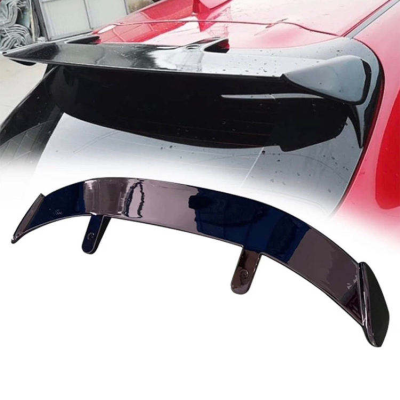
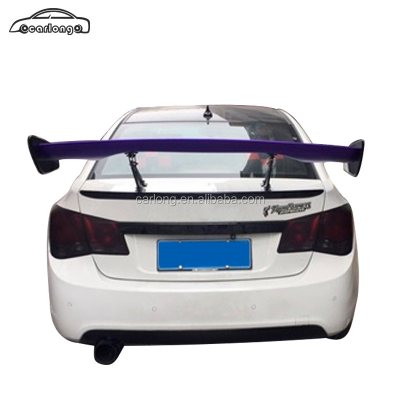
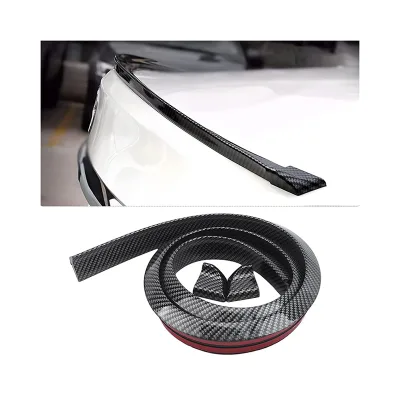
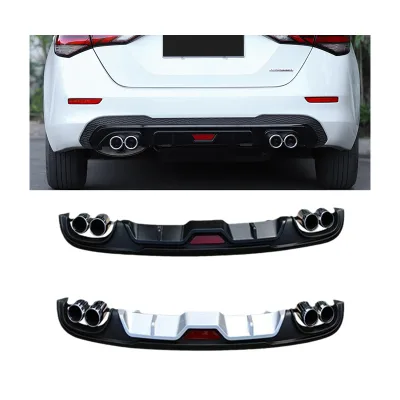
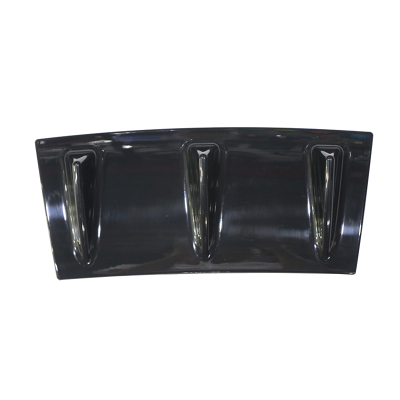
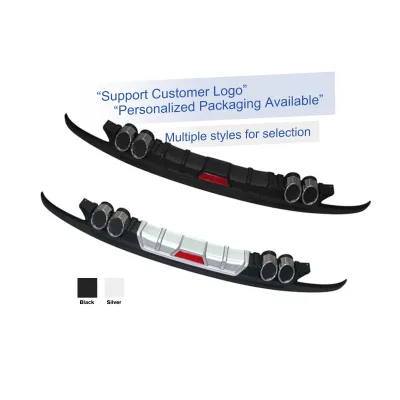


Trunk Spoiler Lip Universal Car Lip Spoiler Bumper Rubber Rims Protector
$5.07 - $5.15
MOQ: 1000 Pieces

Comprehensive Sourcing Guide
Strategic Sourcing Guide for Rear Spoilers in the Automotive Aftermarket
Understanding Product Variations and Material Composition
When sourcing rear spoilers, buyers must first navigate the significant variance in material composition, as this dictates the final product's durability, weight, and aesthetic finish. The market presents distinct categories ranging from rigid structural plastics to flexible protective films. Based on observed product attributes, the primary material categories include ABS (Acrylonitrile Butadiene Styrene), Carbon Fiber, and flexible polymers such as PVC, Polyurethane, or EPDM. ABS is frequently cited for its balance of rigidity and cost-effectiveness, making it a common choice for universal fitment models that require structural integrity. In contrast, Carbon Fiber options offer a premium aesthetic with a "Black/Carbon Fiber Black" finish, often targeting high-performance or luxury vehicle segments where weight reduction and visual appeal are paramount.
A critical distinction in this category is the difference between a rigid spoiler component and a flexible lip or trim strip. Some listings describe products with a "Self Adhesive Tape" backing and dimensions like "1.5m3.5cm2cm," indicating a flexible rear lip or spoiler strip designed for direct application. These are often made from PVC or Polyurethane, materials chosen for their ability to conform to body curves without cracking. The "Backing Material" is explicitly noted as "Self Adhesive Tape" in several instances, suggesting a "3m Tape Install Directly" method that simplifies the installation process for the end-user. Buyers must verify whether the material specification aligns with their target vehicle's body composition; for instance, a rigid ABS unit may require drilling and mechanical fastening, whereas a Polyurethane strip relies entirely on adhesive bonding. The "Color" attributes further diversify the selection, ranging from standard "Black" and "Matt Black" to specialized finishes like "Shine Black" and "Pearl White," with some suppliers offering "Customer Requirement" customization to match specific OEM paint codes.
Technical Specifications and Fitment Standards
Technical specifications for rear spoilers are not one-size-fits-all; they are defined by the intended application and the vehicle model compatibility. The "Car Model" attribute is frequently listed as "Universal," which implies a design intended to fit a broad range of vehicles, particularly "Hatchback" models as noted in specific product descriptions. However, the term "Universal" requires careful verification by the buyer to ensure the physical dimensions align with the target vehicle's trunk or deck geometry. Specific product models, such as "LJL-0136," "LJL-0137," "LJL-0130," "LJL-0128," and "LJL-0135," indicate that manufacturers produce distinct SKUs for different aerodynamic profiles or vehicle classes.
Dimensions and packaging standards provide further insight into the logistics of the product. Observed standard packaging dimensions include "17cm25cm18cm" for smaller units and "50X50X30 cm" for larger carton shipments, while flexible rolls may be packaged as "One Roll in One Small Box, 30 Small Boxes in One C." The "Type" of product is explicitly categorized as "Rear Roof Spoiler" or "Rear Spoiler," and some listings specify the "Deck" as "Single," which refers to the mounting surface configuration. For buyers sourcing flexible lips, the standard length is often "1.5m or customize," allowing for adaptation to various trunk lengths. The "Application" scope is broad, covering "Trunk, Roof, Bonnet, Hatch Gate," and "Universal Side Skirts/Rear Front/Chin," indicating that the same supply chain often serves multiple body modification needs. It is essential to confirm the "Installation" method, as some products rely on "3m Tape Install Directly," while others may require more complex mechanical integration depending on the material rigidity.
Compliance, Certification, and Quality Assurance
Quality assurance in the automotive accessories sector is heavily reliant on third-party certifications and adherence to international standards. Buyers should prioritize suppliers who can demonstrate compliance with recognized safety and quality management systems. Observed certifications in the market include "TUV" and "GS," which are critical for products intended for European markets, as well as "ISO," "CCC," and "CE" marks. The presence of "TUV" and "GS" suggests that the product has undergone rigorous testing for structural integrity and safety, which is particularly relevant for aerodynamic components that may affect vehicle handling or stability at high speeds. Similarly, "ISO" certification indicates a standardized quality management system, while "CCC" (China Compulsory Certification) is a mandatory requirement for products sold within the Chinese market.
Beyond certifications, the physical attributes of the product serve as proxies for quality. The "Condition" is consistently listed as "New," and features such as "Waterproof" and "Durable" are highlighted as key selling points. These claims must be substantiated through the material selection; for example, Polyurethane and ABS are inherently resistant to weathering, but the longevity of the "Self Adhesive Tape" is a critical failure point. Buyers should verify the adhesive's resistance to UV exposure and temperature fluctuations, as the "Usage" is explicitly defined as "Protection Car Body" and "Decoraion" (Decoration). The "Features" also include "Easy Installation," which implies that the adhesive strength must be sufficient to hold the component securely without damaging the vehicle's paint. When evaluating suppliers, request test data or specific references to how the "Waterproof" and "Durable" claims were validated, as these are functional requirements that directly impact customer satisfaction and return rates.
Cost Drivers and Pricing Dynamics
The pricing structure for rear spoilers is influenced by a complex interplay of material costs, customization levels, and order volume. The observed price range in the market spans from $1.67 to $368, a variance that reflects the difference between simple adhesive strips and complex, molded ABS or Carbon Fiber units. The lower end of the spectrum likely corresponds to flexible PVC or Polyurethane strips with standard "Black" coloring, while the higher end encompasses premium materials like Carbon Fiber or custom-molded ABS units tailored to specific vehicle models.
The "MOQ" (Minimum Order Quantity) is another significant cost driver, with observed ranges between 2 and 1000 units. Suppliers offering an MOQ of 30 PCS, as seen in specific listings, are more accessible for small to medium-sized buyers, whereas those requiring 1000 units may offer better per-unit pricing for large-scale distributors. Customization is a primary factor in price escalation; attributes like "Customized" and "Customization: Available" suggest that buyers can request specific colors, dimensions, or branding, but these services often incur additional costs and longer lead times. The "Service" attribute of "OEM&ODM" indicates that suppliers are capable of manufacturing private-label products, which can be a cost-effective strategy for brands looking to establish their own product lines without investing in tooling. However, the "Manufacture" history, such as a "20 Years Factory" background, may also influence pricing, as established manufacturers often command a premium for their proven track record and reliability.
Supplier Evaluation and Operational Capabilities
Evaluating potential suppliers requires a focus on their operational capabilities, location, and service offerings. The "Place of Origin" is consistently identified as "Guangdong, China," a region known for its robust manufacturing ecosystem and supply chain efficiency. This concentration of suppliers in Guangdong suggests a competitive market with a high density of specialized manufacturers. Buyers should verify the "Brand Name" and "Manufacture" details to ensure the supplier has a legitimate history; for instance, "Haosheng" is a specific brand mentioned, and a "20 Years Factory" claim implies a level of stability and experience that can reduce procurement risk.
The "Service" capabilities, specifically "OEM&ODM," are crucial for buyers looking to differentiate their product offerings. Suppliers offering these services can accommodate custom branding, specific color requirements, and tailored dimensions. The "Customized" attribute confirms that flexibility is available, but buyers must clarify the scope of customization and any associated costs. Additionally, the "prod_packing" methods, ranging from "OPP" bags to "Carton" boxes and specialized roll packaging, indicate the supplier's ability to handle different shipping requirements. A supplier that offers "One Roll in One Small Box, 30 Small Boxes in One C" demonstrates an understanding of efficient logistics and inventory management. Buyers should also assess the supplier's ability to handle "Customization" requests, as the "Color" options include "Matt Black, Shine Black, Pearl White, Black," and "Customer Requirement," suggesting a capacity for bespoke production.
Long-Term Procurement and Application Strategy
For long-term success, buyers must align their procurement strategy with the specific applications of the Rear Spoiler. The "Application" is diverse, covering "Car," "Trunk, Roof, Bonnet, Hatch Gate," and "Universal Side Skirts/Rear Front/Chin." This versatility means that a single supplier can often serve multiple market segments, from general automotive repair shops to high-end customization studios. The "Usage" as "Protection Car Body" and "Decoraion" highlights the dual function of these products, which appeals to a broad customer base seeking both aesthetic enhancement and physical protection.
To ensure long-term viability, buyers should focus on suppliers who offer consistent quality and reliable support. The "Features" of "Easy Installation" and "Waterproof" performance are key drivers of customer retention, as they reduce the friction of installation and increase the product's lifespan. The "Installation" method of "3m Tape Install Directly" is a significant advantage for DIY markets, but it requires high-quality adhesive to prevent failure over time. Buyers should also consider the "Standard" dimensions and "prod_model" consistency to ensure that their inventory remains relevant as vehicle models evolve. Finally, the "Certification" status, including "TUV, GS, ISO, CCC, CE," provides a foundation for trust and compliance, ensuring that the products meet the regulatory requirements of the target markets. By prioritizing suppliers with strong certifications, diverse material options, and flexible customization services, buyers can build a resilient supply chain capable of meeting the dynamic demands of the automotive aftermarket.
FAQs
What materials are used for rear spoilers?
Rear spoilers are commonly made from ABS, Carbon Fiber, PVC, Polyurethane, or EPDM. ABS offers rigidity for universal fitment, while Carbon Fiber provides a premium aesthetic. Flexible strips often use PVC or Polyurethane with self-adhesive tape backing for direct installation.
Can I customize the color of the Rear Spoiler?
Yes, customization is available for colors like Matt Black, Shine Black, Pearl White, or specific customer requirements. Suppliers offer OEM and ODM services to match paint codes or design preferences, though this may affect pricing and lead times depending on the order volume.
How are rear spoilers installed on the vehicle?
Many rear spoilers feature self-adhesive tape for direct installation without drilling. Some rigid models may require mechanical fastening, but flexible lips often use 3m tape for easy application. Always verify the specific installation method based on the material and product model selected.
Which certifications do Rear Spoiler suppliers typically hold?
Suppliers often hold certifications such as TUV, GS, ISO, CCC, and CE to ensure quality and safety. These marks indicate compliance with international standards for structural integrity and durability. Buyers should prioritize vendors with these credentials for European or regulated markets.
What is the minimum order quantity for rear spoilers?
The minimum order quantity ranges from 2 to 1000 units depending on the supplier and customization level. Some listings specify an MOQ of 30 pieces for standard models, while larger distributors may require higher volumes. Lower MOQs are often available for standard black or universal fitment items.
Where are Rear Spoiler manufacturers located?
Most manufacturers are located in Guangdong, China, a hub for automotive accessory production. This region offers efficient supply chains and a high density of specialized factories. Buyers can expect a competitive market with diverse options for both rigid and flexible spoiler components.
What packaging is used for shipping rear spoilers?
Packaging varies by product type, ranging from OPP bags to cartons and specialized roll boxes. Flexible strips may be shipped as one roll in a small box with 30 boxes per master carton. Standard dimensions include 17cm*25cm*18cm for smaller units and 50X50X30 cm for larger shipments.